Adult international thriller / corporate-political / family saga
The Inheritance
BORN TO INHERIT AN EMPIRE. DESTROYED BY HIS OWN FAMILY. REBUILT IN EXILE. IMPRISONED. REMADE. AND WHEN THE FAMILY WHO ERASED HIM COME BACK ASKING FOR HELP, THEY DO NOT RECOGNISE THE SCARRED MAN DECIDING WHETHER THEY SURVIVE.
Born to inherit a multinational family empire, Adrian Mercer is destroyed by siblings who fear what their father intends to give him. He escapes abroad, rebuilds, is betrayed again, and fails to escape a second time. Imprisoned in a third country, Adrian is nearly killed and remade by a brutal economy of fear, violence, debt and information. Years later, his systems mind propels him into extraordinary authority during a cascading global food and logistics crisis. Then the family who erased him arrives asking for help — and does not recognise the scarred man deciding whether they survive.
The Books
READ IN ORDER
Every title in the series, in reading order. Choose how you enter.
The Story
ABOUT THIS SERIES
THE INHERITANCE — BETRAYAL • EXILE • BECOMING • POWER • MERCY You don't choose what you inherit. You choose what you pass on.
There are things families leave behind that never appear in a will. Money. Companies. Property. Shares. A name. Those are the inheritances everyone can see.
Then there are the others. Favouritism. Jealousy. Shame. Secrets. Violence. Betrayal. The wounds parents give their children and children pass to one another until nobody remembers where the damage began.
Adrian Mercer will inherit both. And before his story is finished, he will have to decide which one ends with him.
AN EMPIRE WORTH BETRAYING YOUR OWN BLOOD FOR
At twenty-five, Adrian Mercer has every reason to believe his future is secure. His father, Richard Mercer, built Mercer Global from almost nothing — a multinational empire of agricultural production, storage, shipping, commodity trading, cold-chain infrastructure and supply-chain analytics. Its scale dwarfs the family that owns it.
His father's children grew up in that shadow — but not equally. Adrian is the son of the woman Richard loved most: brilliant, gifted at recognising patterns in complex systems, and unmistakably his father's favourite. His older siblings have spent years watching. Their resentment is not entirely unjustified.
Then Richard signals that decisive succession authority over Mercer Global may pass to Adrian. For him, it is the future he always assumed awaited him. For them, it is the final humiliation.
So they decide to take that future away. They do not need to invent Adrian's flaws; they only need to weaponise them. A genuine mistake becomes the foundation for fabricated evidence. Truth and deception become impossible to separate. Media, the board, friends and finally family turn against him.
Adrian cannot simply prove his innocence, because he isn't entirely innocent. As the trap closes, someone secretly warns him before the final move. Adrian runs. And for the first time in his life, being a Mercer cannot save him.
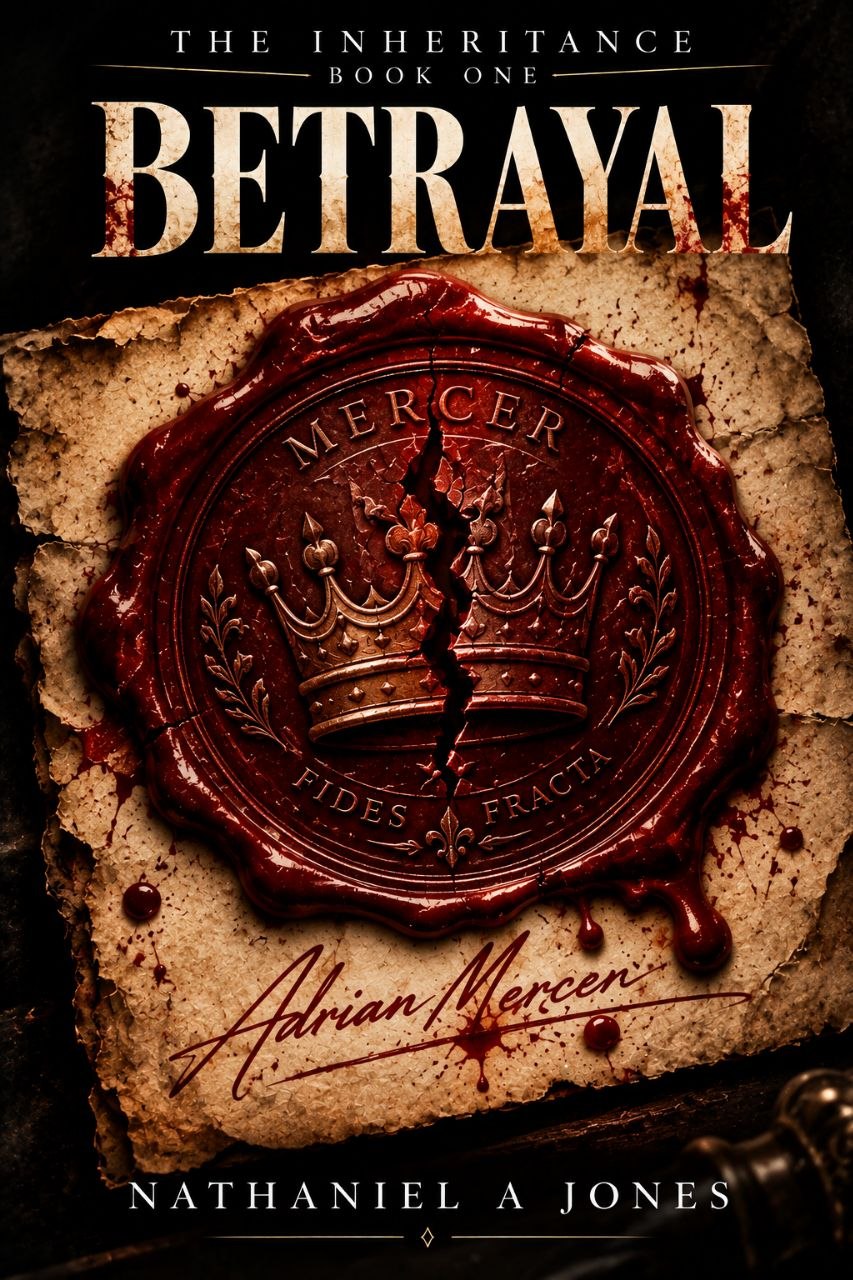
BETRAYAL asks what happens when the people who know exactly where you are vulnerable decide to use it.
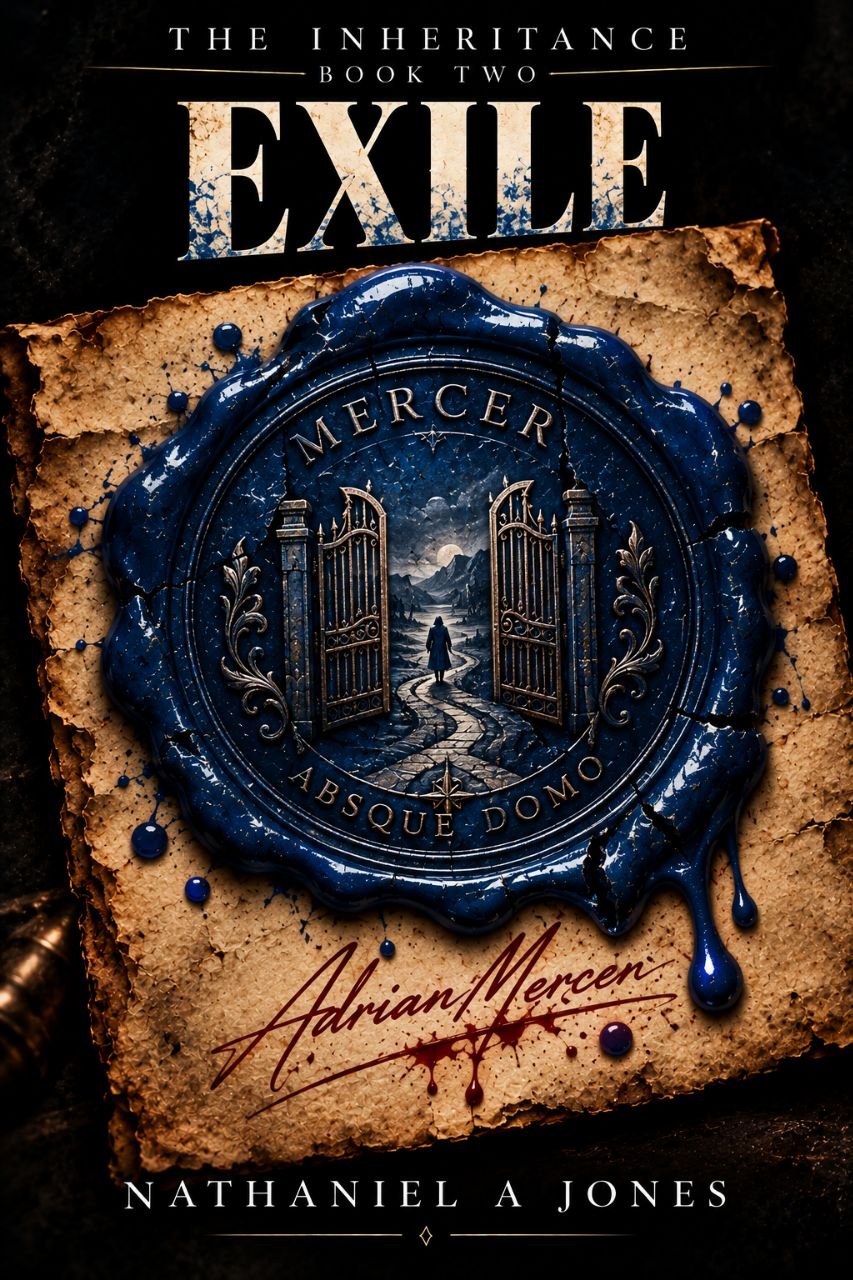
EXILE What remains when your name no longer means anything?
Adrian escapes to another country, and stays long enough to believe he has escaped more than prosecution and scandal. He begins escaping Adrian Mercer. He works below his abilities. He adapts. He builds friendships with people who do not care who his father is. He may even learn what it means to be loved by someone who knows the man who survived the fall, rather than the privileged heir who existed before it.
For perhaps the first time, Adrian builds something that belongs entirely to him. Not an inheritance. A life.
Then someone close enough to destroy it discovers who he really is — and chooses something else over Adrian: career, family, reputation, freedom or survival. The old allegations make the new ones easy to believe.
Adrian runs again — with fewer resources, fewer options, and far more to lose. The first time, he escaped. The second time, he doesn't. His flight ends in capture and a cross-border chain that delivers him into a third country, where the Mercer surname buys nothing.
The gates close. Nobody comes. Adrian finally understands that he is alone.
EXILE asks: if you build a new self and someone destroys that too, what remains of you?
BECOMING Prison does not teach Adrian how to survive bad men. It teaches him that he can become one of them.
This is where the series changes. A serious mistake nearly kills him. A group beating leaves him weeks in the infirmary; everyone can know who was responsible, and formal justice can still do nothing. The rules of the outside no longer matter.
So Adrian learns the ones that do. Factions. Guards. Debts. Contraband. Food. Medicine. Information. Fear. Prison has an economy every bit as sophisticated as the corporate world he came from — except its currency can be pain.
Adrian moves from victim to survivor, from student to participant. He fights, lies, bargains, compromises. Then he understands something more dangerous: information moves people more efficiently than fists. Secrets create leverage. Debt creates delayed control. Fear works. Violence can be delegated. A man does not have to throw the punch to decide who gets hurt.
He becomes an operator. Then a punisher. Then he crosses a threshold that cannot be uncrossed — knowingly causing or permitting terrible harm, and discovering that part of him can live with it. The frightened prisoner is disappearing. In his place is someone who understands hierarchy, scarcity, leverage, coercion and fear at an instinctive level. Someone capable of extraordinary power. Someone Adrian himself might once have feared.
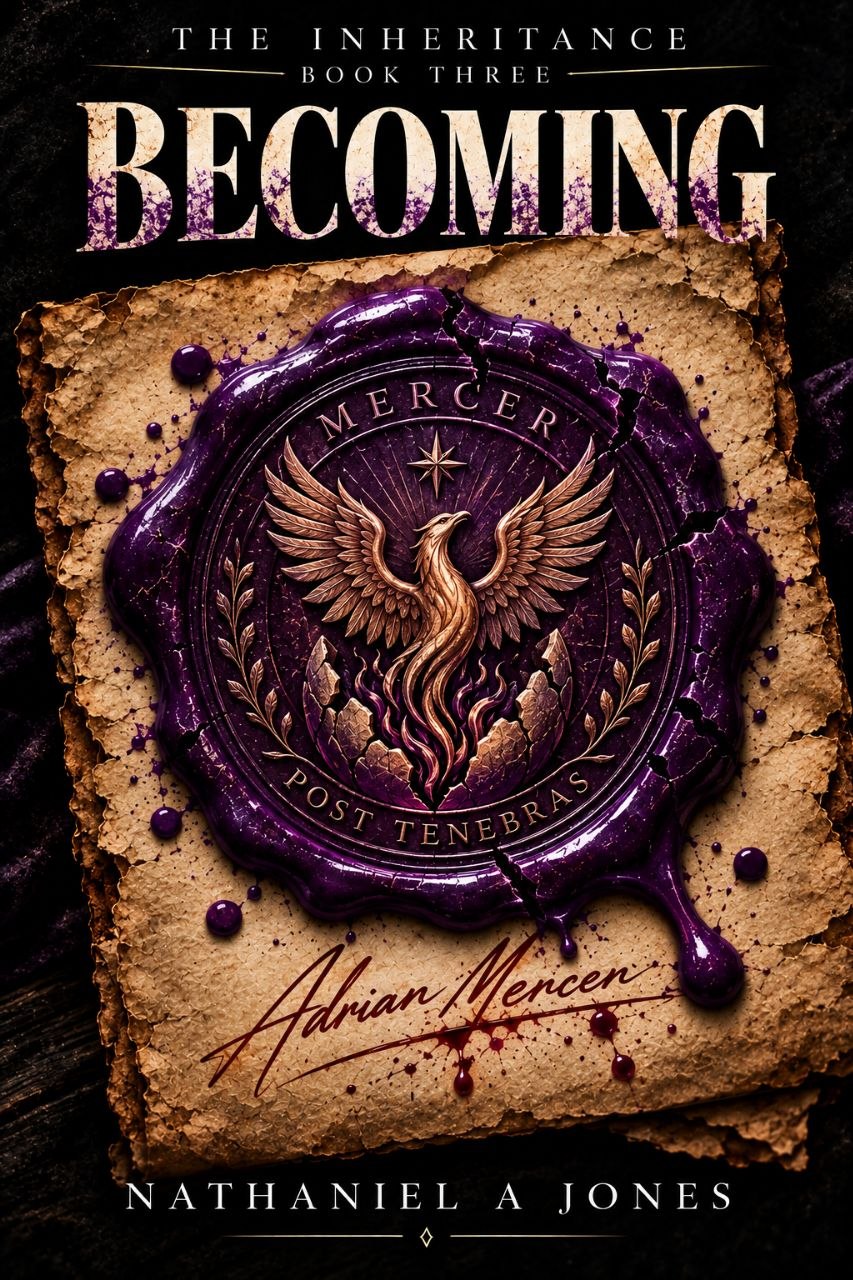
Prison authors the next version of Adrian Mercer. And the phoenix on the cover of BECOMING does not represent a clean rebirth. It represents something rising from destruction without any guarantee that what emerges will be good.
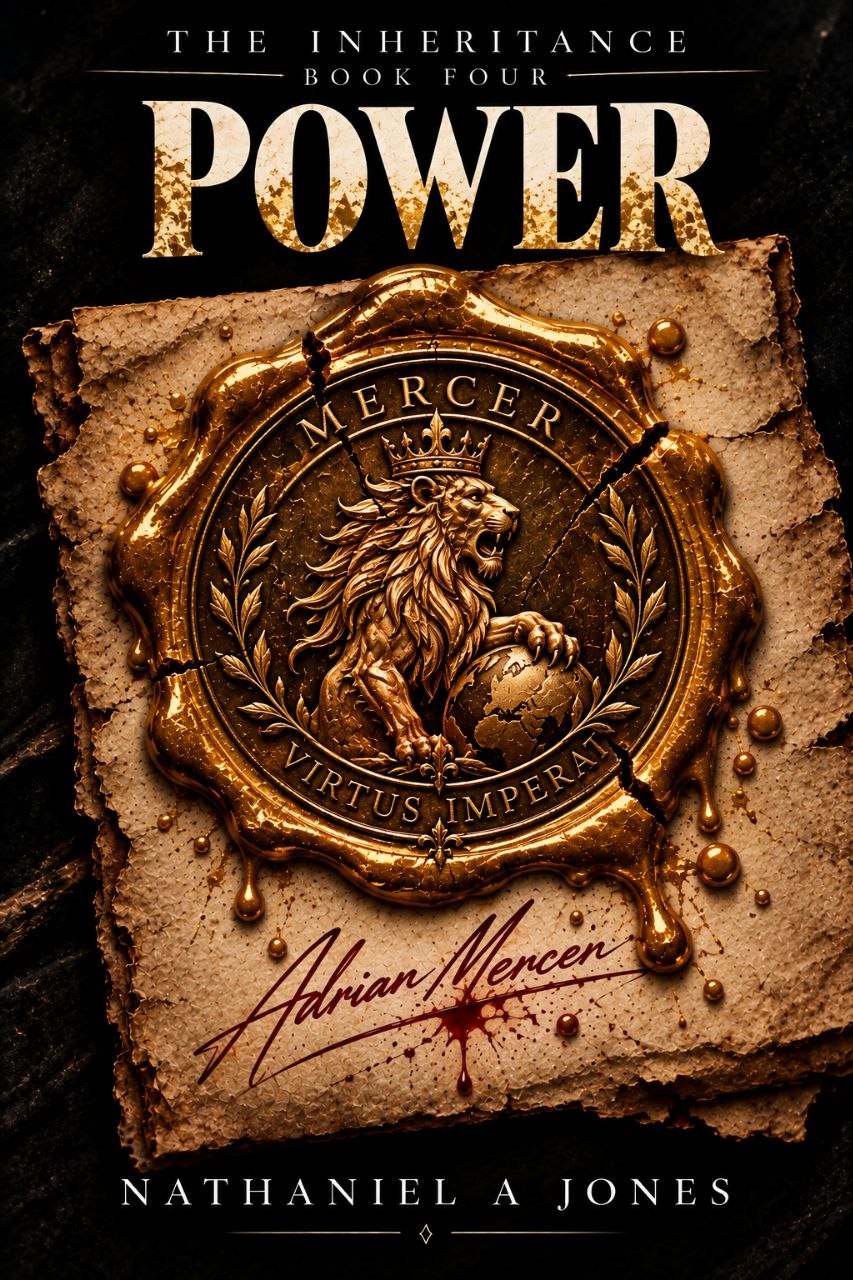
POWER What happens when the lessons that kept one man alive can keep millions alive?
Adrian leaves prison — but prison does not leave Adrian. His body carries scars. His relationships carry scars. His instincts are changed: he reads rooms differently now, notices exits, hierarchy, scarcity, hidden incentives, and who holds real authority rather than merely the title.
Then something else returns from his old life: a prediction. Years earlier, Adrian had modelled the possibility of a cascading global food and supply crisis. Now crop failures, fertiliser and energy shortage, shipping disruption, export bans, war, speculation and panic begin to make it real. Food security becomes national security.
His rise is not miraculous; someone recognises what his mind can do. Analysis leads to advisory influence. Influence becomes operational responsibility. Responsibility becomes authority. And the greater the crisis, the more valuable Adrian becomes.
Storage must be controlled. Transport prioritised. Prices managed. Resources rationed. Security imposed. Decisions made about who receives what, and when. Millions of lives can depend on those decisions. Adrian discovers an uncomfortable truth: the same principles that governed prison can govern nations during crisis. Scarcity creates hierarchy. Information creates leverage. Protection can become ownership. Coercion works.
Sometimes he rejects the most brutally efficient solution because he recognises exactly where it leads. Sometimes he uses it anyway, because people will survive. The world increasingly rewards him for doing precisely what prison taught him. And with each success comes a more dangerous question: if control saves lives, how much control becomes justified?
By the time Mercer Global appears again, Adrian is no longer the young man who fled his family. His assistant brings him a request for a delegation seeking critical resources. Adrian reads the names. His siblings.
POWER asks: when effectiveness makes coercion work, who decides when enough control is enough?
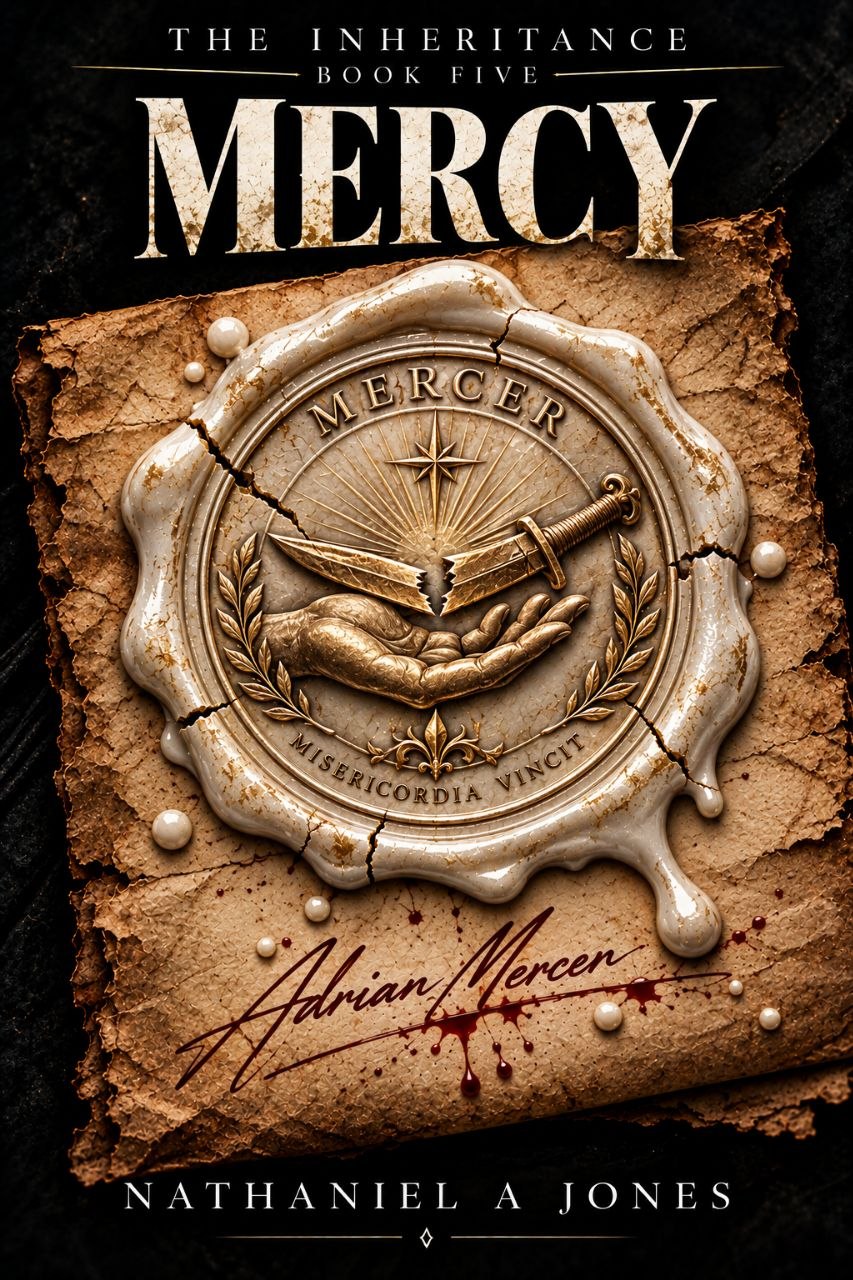
MERCY Adrian Mercer finally has what he feared he would never possess again. Control.
His siblings arrive needing help. They do not recognise him. Years have passed; Adrian is older, scarred, physically altered — and they have spent years believing the brother they destroyed is gone. Adrian recognises them immediately. And says nothing.
He deals with them professionally. He controls their access, their resources, and how long they wait. He tells himself he is merely teaching them — anonymous warnings, surveillance, controlled delays, administrative freezes, old photographs, private phrases nobody else should know, the sensation of being watched. Adrian can reproduce fear without laying a hand on anyone. He learned from experts: his family. His prison. Himself.
Then innocent people begin feeling the consequences. Partners. Children. People who had nothing to do with what happened to him. And Adrian sees something terrifying: the damage is becoming an inheritance again — only now he is the one passing it on.
The full truth begins to surface: who designed the original betrayal, who exploited it, who remained silent, who secretly warned him, what Richard knew, and who was responsible for the second betrayal. But MERCY is not a trial in which Adrian alone judges everyone. His own actions must be confronted — his cruelty, his manipulation, the violence he enabled, the fear he deliberately manufactured, the things he justified because he had once been a victim.
Adrian must finally distinguish three things he once allowed to become inseparable: revenge, justice and mercy. Not every sibling deserves the same fate. Forgiveness does not require restored relationships. Mercy does not erase lawful consequences.
Adrian holds the power to destroy the people who once destroyed him. That is precisely why his final choice matters.
MERCY is not the absence of consequences. MERCY is Adrian refusing to destroy people simply because he can.
THE THREE INHERITANCES Beneath the international conspiracy, the prison brutality, the corporate warfare and the global crisis, the series is built around three things Adrian Mercer receives.
The Material Inheritance — the wealth, shares, voting control, businesses, property, influence and the family name. Everything everyone believes the fight is about.
The Inheritance of Damage — favouritism, jealousy, humiliation, secrecy, betrayal, violence, trauma. What the Mercer family actually passes from one generation to the next.
The Chosen Inheritance — what Adrian decides to keep, what he refuses to become, what he allows to end with him, and what, if anything, he chooses to pass forward.
THAT is what the entire five-book saga is ultimately about.
FIVE BOOKS. ONE TRANSFORMATION.
BETRAYAL — His family destroys the future he thought he would inherit.
EXILE — He builds another life — and loses that one too.
BECOMING — Prison teaches him that power can be manufactured from fear, information, violence and debt.
POWER — The mind that helped him survive becomes capable of helping nations survive.
MERCY — The people who once held his life in their hands finally stand within his.
THE INHERITANCE is not ultimately asking whether Adrian Mercer can defeat his family. It asks something harder: Can a victim become an oppressor without recognising the moment it happens? Can control remain moral simply because it works? Is forgiveness still virtuous when revenge is justified? And does mercy mean anything if you never possessed the power to destroy?
Adrian begins believing inheritance is something his father can give him. By the end he understands that the deepest inheritance was never Mercer Global. It was everything his family put inside him — the love, the privilege, the arrogance, the betrayal, the rage, the fear, the damage. And now Adrian has to decide what happens to it.
You don't choose what you inherit. You choose what you pass on.
Reader Promise
A five-book adult international thriller — from the boardrooms of an empire to the cells of a brutal prison to the machinery of a collapsing global food supply. Betrayed by his family, remade in exile, hardened in prison and handed world-changing authority by a crisis, Adrian Mercer becomes the thing he once feared before the family who erased him returns asking for help — and fails to recognise the scarred man deciding whether they survive. Adult, psychologically serious, morally complicated. And unafraid to ask whether a victim can become an oppressor without noticing.
The Characters
MEET THE PLAYERS
Protagonist
Adrian Mercer
The 25-year-old favoured son and systems mind, born to Helena Ward Mercer — the woman Richard loved most. Pattern-recogniser destined to inherit Mercer Global, destroyed by his half-siblings, remade in exile, hardened in prison, and given global authority by a food and logistics crisis. Not good because he cannot be brutal, but because he knows exactly how brutal he can be and chooses where to stop.
Father
Richard Mercer
The 67-year-old founder and chairman of Mercer Global. Built the empire from almost nothing and confuses provision, succession and protection with love. His real favouritism toward Adrian creates legitimate wounds among the older children. After Adrian's fall he protects the company and remaining family rather than tearing everything open. His eventual defence: he had a family to protect.
Antagonist — The Architect
Jonathan Mercer
The eldest half-brother, 37, driven by a real and defensible belief that Adrian's succession would erase decades of the older siblings' work. Architect of Adrian's removal, convinced he is saving the company.
The Opportunist
Catherine Mercer
The 34-year-old older half-sister who helps shape the narrative and evidence against Adrian, and benefits directly from his fall.
The Coward
Daniel Mercer
The 31-year-old older half-brother who knows the conspiracy crosses a line but chooses status, security and family unity over stopping it — participating or staying silent.
The Regretful One
Rebecca Mercer
The 28-year-old older half-sister, complicit enough to carry guilt but likely the secret one who warns Adrian before his first escape.
Supporting
Evelyn Mercer
Richard's 64-year-old first wife and mother of Jonathan, Catherine and Daniel. Carries old humiliation and resentment toward the second family.
Supporting (deceased)
Helena Ward Mercer
Adrian's (and possibly Rebecca's) deceased mother — the woman Richard loved most. Her memory intensifies the older siblings' resentment toward Adrian.
The Innocent Inheritor
Noah Mercer
The 18-year-old much younger half-brother, too young to be culpable. Grows up inside a rewritten family history, inheriting a false story rather than the crime.
The World
The Global Crisis
A modern, interconnected world of dynastic wealth and global food logistics, where four countries hold Adrian Mercer's fate and power is traded in grain, shipping, debt and secrets.
Locations
- Country A — Home
- Country B — Exile
- Country C — Prison
- Country D — Power
Factions
- Mercer Global
- Mercer Holdings
- The Mercer Family
- The System
Artefacts
- Voting Control
- The Family Fortune
- The Food Model
Terminology
- The Three Inheritances
- Material wealth, inherited damage, and the chosen inheritance Adrian decides to pass on.
- Mercer Global
- The multinational empire of agriculture, shipping and supply-chain analytics the siblings fight to control.