
Adult Contemporary Biblical Parallel
When Heaven Was Silent
He preached that suffering did not mean God had abandoned you. Then the money disappeared. Their future collapsed. Their three children died. His body began to fail. Their friends started explaining why. And Grace Mercer—the woman standing beside the modern Job—was left with a question no sermon had ever prepared her to ask: What do you do when you still believe in God... but you can no longer understand Him?
Grace Mercer thought she understood suffering. Her husband, Job, had spent years preaching about it. Then their own life begins following the pattern of the ancient story. Wealth disappears. Security collapses. Their three adult children die. Job's body turns against him. Friends arrive with explanations. Their church begins to fracture. And Grace—the wife so often reduced to a single devastating sentence in Scripture—must live through every loss beside him. When Heaven Was Silent is a four-book adult contemporary biblical parallel that brings the Book of Job into modern Australia, asking what faith, marriage and love become when suffering refuses to explain itself.
The Books
READ IN ORDER
Every title in the series, in reading order. Choose how you enter.

The Story
ABOUT THIS SERIES
He has spent years preaching Job. Now his wife has to watch him become Job.
Job Mercer has built a good life. He is a respected pastor, author, husband and father. His success is legitimate. His generosity is real. His marriage to Grace is affectionate, intimate and deeply established. Together they have raised three adult children—Micah, Naomi and Caleb—and built the kind of life people point to when they want evidence that faithfulness, hard work and love can produce something lasting.
Then Job begins preaching through the biblical Book of Job. He thinks he understands it. Before long, Grace will watch him live it.
When Heaven Was Silent is a four-book adult contemporary biblical parallel that takes the theological architecture of Job and translates its function—not simply its ancient props—into the modern world. And this time, the story is witnessed primarily through the woman beside Job.
Grace Mercer is not a footnote. She is a wife. A mother. A woman with a life, work, friendships, convictions, desires and faith of her own. And when catastrophe comes, she loses the same children Job loses. She watches the same future disappear. She suffers the same financial destruction. Then, while carrying her own grief, she becomes carer to a husband whose body is consumed by a severe, visible and agonising illness.
Across four novels, the Mercers' comfortable life is dismantled piece by piece.
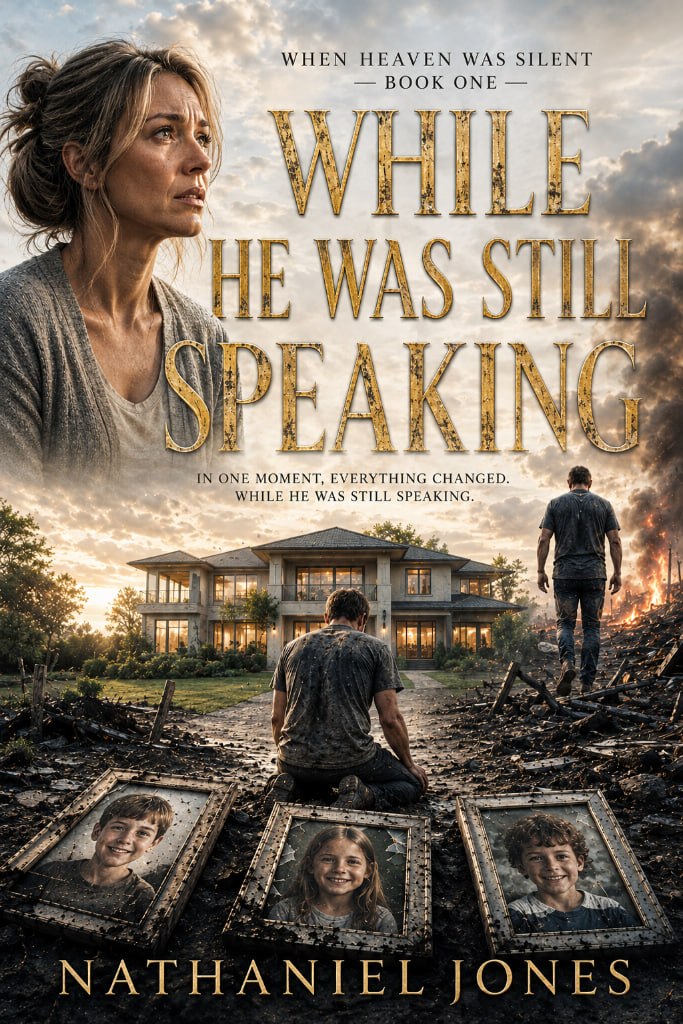
In While He Was Still Speaking, the reader first experiences the life worth losing: a loving marriage, three distinct adult children, friendships, ministry, humour, generosity and security. Then the messages begin arriving. One catastrophe follows another until the final loss is almost impossible to comprehend: all three of their children are dead.
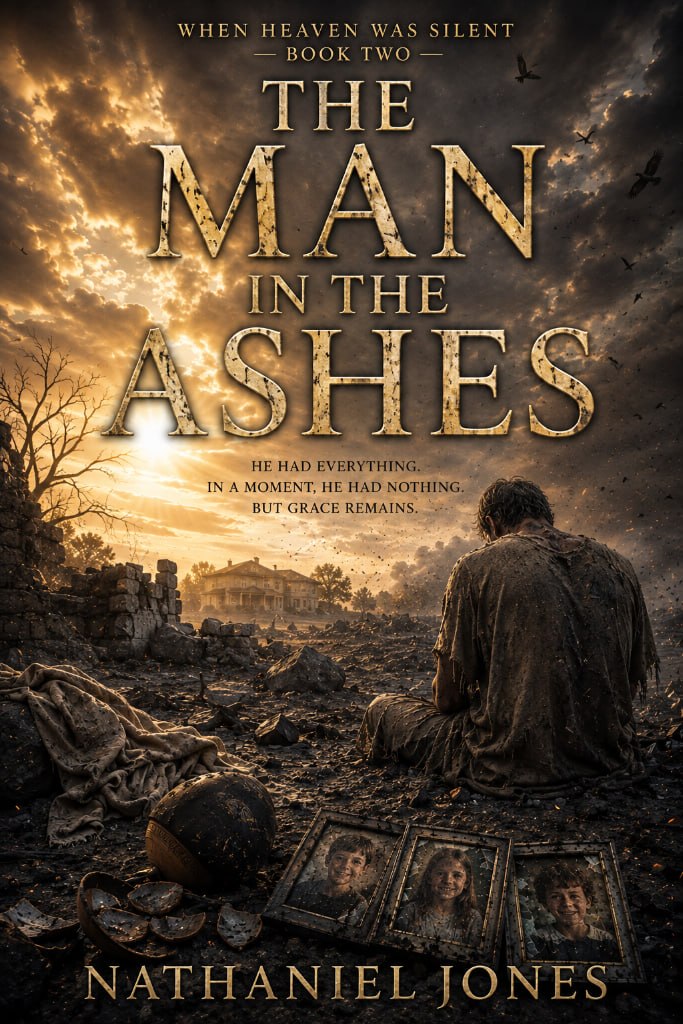
In The Man in the Ashes, catastrophe becomes bodily. Job develops a painful and humiliating illness while Grace becomes bereaved mother, carer, financial survivor and public shield. Their church begins to fracture. Rumours spread. People who once admired Job begin searching for the hidden sin that surely must explain what happened.
Eventually Grace reaches breaking point. The woman remembered for telling Job to curse God and die is no longer presented as a faithless villain. She is a mother who buried all three of her children. A wife watching her husband suffer. A believer who has prayed until prayer itself hurts. And a woman who can no longer understand why heaven remains silent.
Then Job's friends arrive. At first, they do the kindest thing anyone has done. They say nothing. But silence does not last.
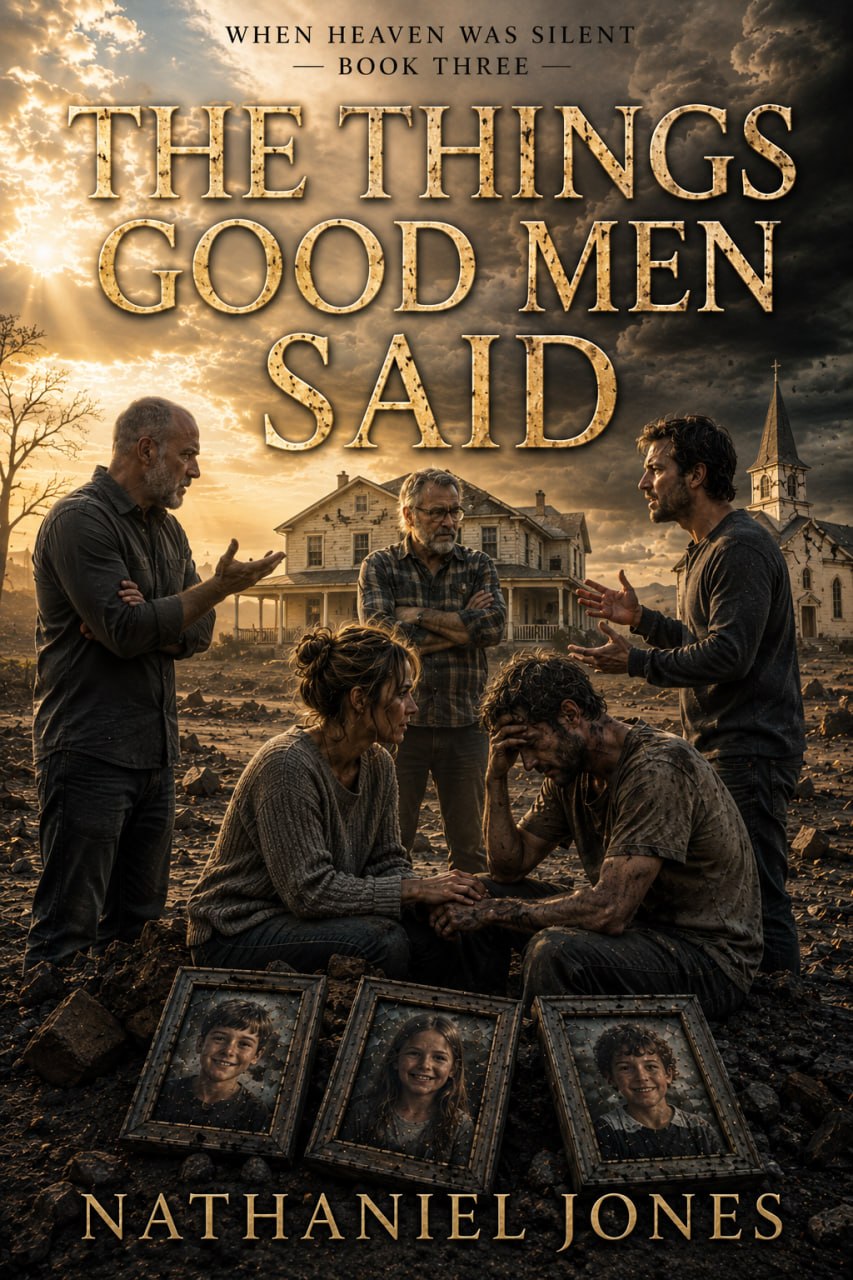
In The Things Good Men Said, three men who genuinely love Job begin trying to explain his suffering. Their theology differs, but each needs the world to remain understandable. Suffering must have a reason. Justice must operate according to a system they recognise. Job must have done something—or failed to do something—that can make catastrophe fit inside a moral equation. Their explanations gradually become another form of suffering. Because every time they explain why Job's children died, Grace is listening too.
The private tragedy also becomes public. Church politics, former members, Christian influencers, online commentary and media attention transform the Mercer family's grief into something other people can analyse, debate and consume. Job protests his innocence. Grace becomes furious. Friends become increasingly certain. A younger voice enters the argument. And eventually every human explanation runs out.
Then comes When the Whirlwind Answered. God answers. But not with the tidy explanation everyone has been demanding. There is no secret sin revealed that makes Job deserve what happened. There is no simple theological equation that turns three dead children into an understandable lesson. There is no suggestion that sufficient faith would have protected the Mercers from catastrophe.
Instead, Job encounters something larger than explanation. Friends are corrected. Relationships begin the slow work of repair. Job and Grace begin rebuilding a marriage transformed by grief. Their financial and vocational lives recover gradually rather than miraculously resetting overnight. And life eventually grows around the devastation.
But restoration does not mean replacement. Micah, Naomi and Caleb remain their children. They remain named. They remain loved. They remain dead. And even when new joy enters the Mercers' lives, nobody is allowed to pretend that receiving something new makes losing someone old acceptable. That principle sits at the heart of When Heaven Was Silent: restoration does not erase death.
This series explores righteousness without protection, marriage beneath shared catastrophe, public religion versus private suffering, grief, anger, intimacy, doubt, friendship, certainty, mystery and the dangerous human desire to make suffering explainable. It also asks difficult questions without pretending fiction can neatly answer them. What happens when good people suffer? What happens when the explanations offered by good people cause even more pain? Can a marriage survive when husband and wife grieve the same catastrophe differently? Can anger at God exist alongside faith? What happens when someone's private grief becomes public content? And what remains when a person who has spent years explaining suffering from a pulpit discovers that suffering is very different when it enters his own home?
Most importantly, When Heaven Was Silent does not attempt to replace the Book of Job. It is designed to send readers back to it. Each volume draws upon a different movement of the biblical account while creating a gripping contemporary story around Grace, Job, their family, their church and the people who try to help them.
Because thousands of years later, Job's questions have not become ancient. We still ask them. We still search for reasons. We still become uncomfortable when suffering refuses to fit our theology. And sometimes, when we desperately want an explanation—heaven is silent.
Reader Promise
When Heaven Was Silent doesn't ask, 'What if Job lived today?' It asks the more unusual question: what would it have been like to be Job's wife? To lose the children too. To lose the wealth too. To watch your husband's body deteriorate. To hear people speculate about what your family secretly did to deserve it. To care for him while nobody is caring for you. To become angry enough to say something generations of readers will judge you for. And then somehow remain there long enough to witness what comes after the silence.
The Characters
MEET THE PLAYERS
Protagonist
Job Mercer
A respected pastor, author, husband and father who has spent years preaching through the Book of Job—and who must now live it. Blameless, genuine and loved, he watches his fortune fall, his body fail and his children die, refusing to the end to curse the God who allowed it.
Protagonist
Grace Mercer
The woman beside the modern Job—and the heart of this series. Grace is not a footnote. She is a wife, a mother of three, a woman with work, friendships, convictions and faith of her own. She loses the same children, suffers the same destruction and becomes carer to a husband whose body is consumed by illness. The wife once remembered for telling Job to curse God and die is here a bereaved mother who has prayed until prayer itself hurts.
Supporting
The Comforters
Three men who genuinely love Job and at first do the kindest thing anyone has done—they say nothing. But their love curdles into explanation. Each needs the world to remain understandable, so every theology they offer becomes another form of suffering, turning catastrophe into a moral equation Grace is forced to hear.
Supporting
Micah, Naomi & Caleb
The Mercers' three beloved adult children. Their distinct lives, gifts and personalities are established in While He Was Still Speaking so that their deaths are almost impossible to comprehend—and so that, beyond restoration, they remain named, loved and gone forever.
Supporting
The Younger Voice
A younger voice who enters the argument when every human explanation runs out, insisting that suffering can be a teacher—and that the tidy answers of the comforters may have already done more damage than silence ever could.
Supporting
The Congregation
Church politics, former members and online commentators who transform the Mercer family's grief into something other people can analyse, debate and consume. People who once admired Job now search for the hidden sin that surely must explain what happened.
Antagonist
The Whirlwind
The answer that finally breaks the silence. Not a tidy explanation, no secret sin, no theological equation—but an encounter with something larger than explanation, which corrects the friends, begins repair, and refuses to pretend that restoration erases death.
The World
The Ashes
A place of silence and suffering, where a man sits in the ashes and demands an answer from heaven.
Locations
- The Ash Heap
- The House
- The Storm
Factions
- The Suffering
- The Comforters
Artefacts
- The Potsherd
Terminology
- The Whirlwind
- The voice that answered from the storm.
Loved this world?
ENTER ANOTHER
When Heaven Was Silent is one doorway. There are many more.
The Cities of the Plain →